
Welcome to the American Lung Association’s
Legacy planned giving online newsletter
Here, you can find stories about how your support makes a difference in the lives of others by improving lung health and preventing lung disease. We hope you enjoy these stories and share feedback with us.
A Legacy of Resilience and Giving
 Keith turned hardship into lasting legacy helping others breathe easier and live longer.
When Cory Fortner first met Keith Ayres (both pictured) at eight years old, he had no way of knowing the influence Keith would have on his life. Over the next thirty years, Keith became a trusted mentor and father figure, leading by quiet example and steady determination.
“He wanted to do good for the sake of doing good and to help lessen other people’s pain.” — Cory Fortner (on left)
Read More
Keith grew up in a family of educators, but his heart belonged to the land his relatives had cared for over generations. He loved the ranch and its cattle, especially Hereford, Angus, and Black Baldy breeds, and could talk about them for hours. Skilled as both a draftsman and an engineer, he was resourceful and able to repair or build almost anything the ranch required.
From the start, life presented Keith with a serious challenge. Diagnosed with cystic fibrosis as an infant, he lost two older sisters to the same disease. Refusing to let it define him, he stayed active and believed that hard work and time outdoors kept him strong.
In 2013, after a series of severe health complications, Keith received a double lung transplant at UT Southwestern. The surgery gave him precious years to enjoy the ranch with the animals he loved, spend time boating on the lake, and be with those closest to him. Even as treatments began to affect his kidneys and liver, Keith held fast to his values of honesty, generosity and persistence.
Grateful for the care and research that extended his life, Keith wanted to make a lasting difference for others. Years before his passing, he chose to include the American Lung Association in his estate plans.
“He always put the mission above himself,” Cory said. “He wanted to do good for the sake of doing good and to help lessen other people’s pain.”
Through his gift, Keith will help the Lung Association advance research, education, and prevention so that more people can face lung disease with hope. His life and generosity are proof that one person’s resolve can leave a legacy of strength and compassion.
Top Five Bronchiectasis Facts You Need to Know
 With the right care and knowledge, people with bronchiectasis are living healthier, fuller lives.
Bronchiectasis affects as many as half a million adults in the United States, yet many have never heard of it. Even among those living with the disease, there are common misunderstandings. Learning the facts can help improve diagnosis, treatment and daily management.
Read More
Bronchiectasis is a chronic lung condition where the walls of your airways, called bronchi, widen and thicken because of inflammation and infection. This damage makes it harder to clear mucus, dust and bacteria. The buildup can lead to repeated infections, more inflammation and further lung damage. Early diagnosis and treatment of bronchiectasis and any underlying condition are important for preventing additional harm to your lungs. While there is no cure, the right treatment plan can help you manage symptoms and protect lung function.
What You Should Know—These five facts can help clear up common misunderstandings and guide better care
1. Bronchiectasis is not COPD. Although both conditions can cause shortness of breath, coughing and mucus buildup, bronchiectasis is different from COPD. Understanding the difference is important because each requires a specific approach to care.
2. A diagnosis can break the cycle. Without proper management, infections and inflammation can create a cycle of worsening lung damage. An accurate diagnosis is the first step toward effective treatment and can help prevent further harm to the lungs.
3. It is treatable. While there is no cure, bronchiectasis can be managed through airway clearance techniques, infection control and prevention of flare-ups. A personalized treatment plan developed with a healthcare provider can help maintain lung function and quality of life.
4. Seeing a specialist matters. Not all providers are experienced in treating bronchiectasis. A pulmonologist with knowledge of the condition can create a treatment plan that addresses your needs and coordinate care for other respiratory conditions.
5. Management is ongoing. Self-care, education and consistent communication with your care team are essential for long-term management. Staying informed and following a treatment plan can help slow disease progression.
Because of you, the American Lung Association is moving research forward, improving care and raising awareness about chronic lung conditions like bronchiectasis so more people can get the help they need. Thank you for helping us bring hope and better health to people living with this disease.
To learn more about bronchiectasis, visit Lung.org/bronchiectasis.
Your Legacy Can Help Save Lives
 A simple gift today can shape tomorrow’s breakthroughs in lung health.
Your future plans matter. They protect your loved ones and can also help create a world free of lung disease. Many supporters choose to include the American Lung Association in their will or trust, knowing their gift will advance research, education and advocacy to help save lives.
Read More
This type of gift costs nothing now and can be made through your will, life insurance, retirement or other financial accounts. You can change your plans at any time, and gifts of any amount are deeply appreciated.
For sample language to include the American Lung Association in your estate plans, visit Legacy.Lung.org/sample-language-for-your-will-or-trust.
You can download helpful planning resources at Legacy.Lung.org/resources.
If you have included the American Lung Association in your plans, please let us know so we can thank you and welcome you to our Legacy Society.
The Search for a Universal Flu Vaccine
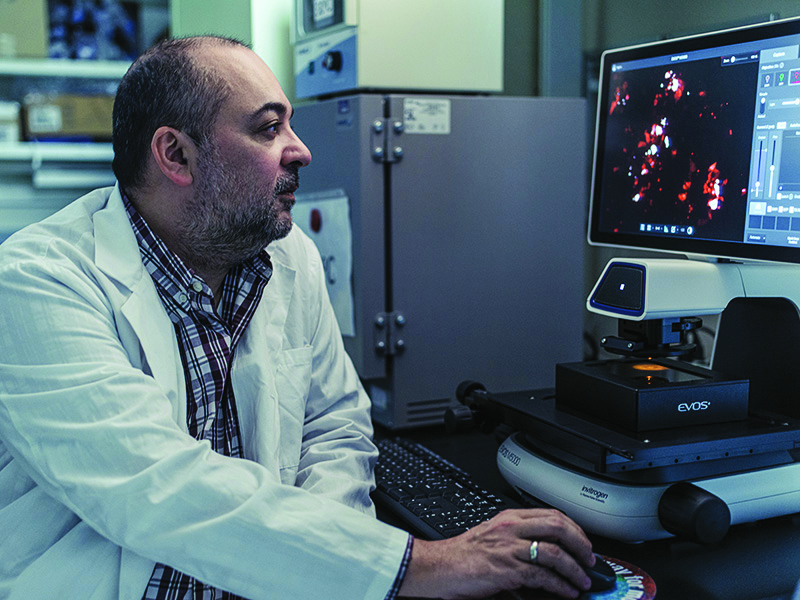 Advances in research drives innovations in respiratory health.
Every year, seasonal flu vaccines help protect millions from severe illness and hospitalization. Because influenza strains change, the vaccine must be reformulated and given annually.
Read More
The American Lung Association Research Institute is funding research to change that. In partnership with Texas Biomedical Research Institute in San Antonio, we are supporting the important work of doctors like Luis Martinez-Sobrido, PhD to develop a universal flu vaccine that could provide long-lasting protection against multiple flu strains. This advancement could one day remove the need for yearly flu shots.
Dr. Martinez-Sobrido’s team is using a single cycle virus approach. The virus is genetically engineered so it can replicate only once, producing a strong immune response without creating more infectious virus. This method may make the vaccine both safer and more effective than current options. By including multiple influenza strains, it also prompts broader immunity.
The Centers for Disease Control and Prevention estimates that last flu season there were about 40 million illnesses, 470,000 hospitalizations and up to 28,000 deaths from influenza in the United States. A universal vaccine could help reduce this burden on a global scale.
Because of your support, the American Lung Association can help promising ideas reach patients faster. Together, we are driving breakthroughs that protect families, keep communities healthier and give more people the chance to breathe freely.
Your Flu Shot Matters
Annual flu vaccines help protect you and those around you from serious illness and hospitalization.
The CDC recommends that everyone six months of age and older get a flu shot each year.
Find out where to get yours at Lung.org/flu.

Your legacy could be a world free of lung disease. I’m here to help.
Your gift will make a lasting impact by helping save lives for years to come.
Cheryl J. Smoot
Vice President,
Individual and Planned Giving
Phone: 312-801-7642
Cheryl.Smoot@Lung.org
We are here to answer any questions and to discuss these options to achieve your personal and philanthropic goals. Please email us with any questions you may have.